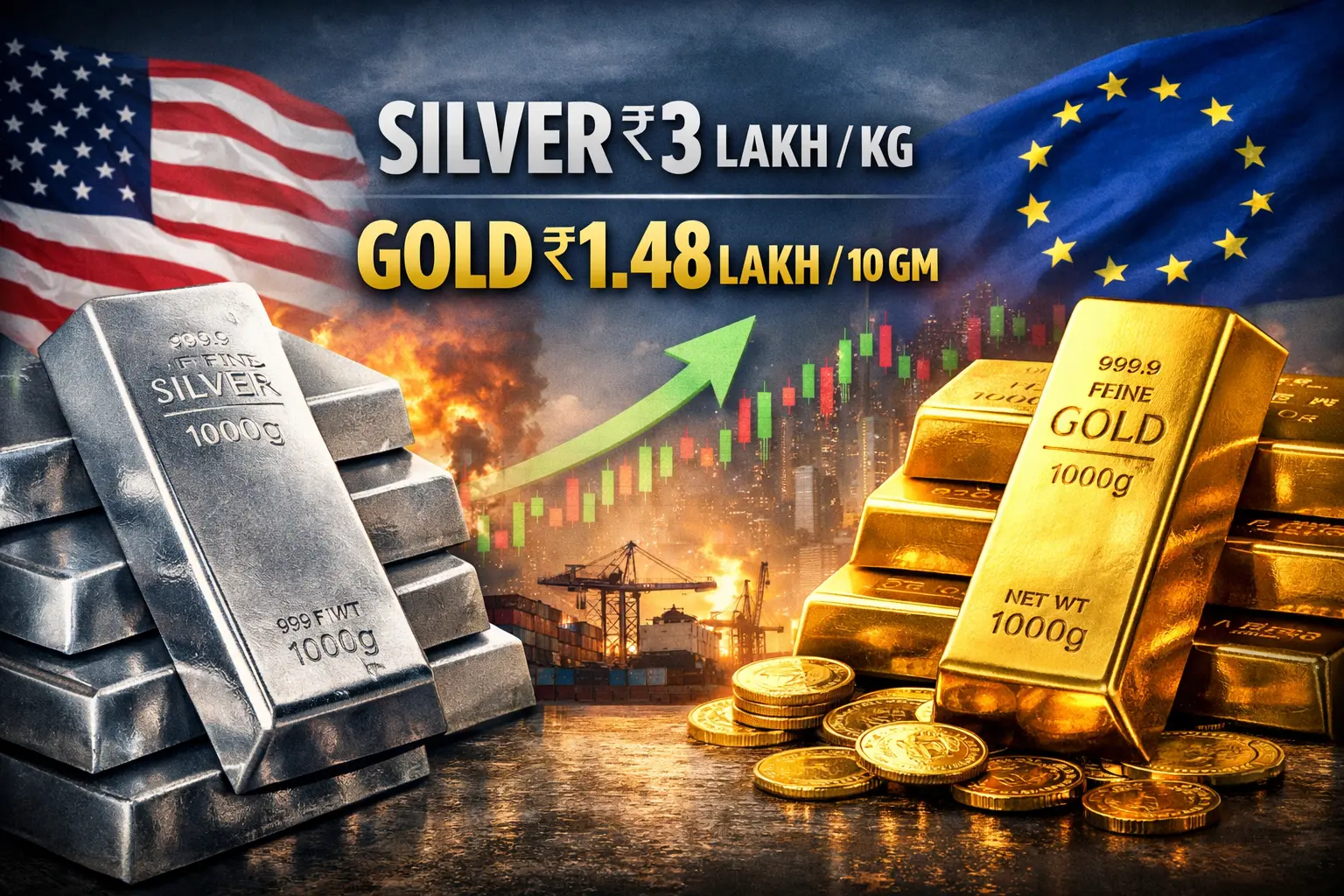
Gold has hit a massive new high, breaking the $5,000 per ounce mark for the first time ever. Seeing 31 grams of gold reach this price has stunned everyone from casual investors to high-level policymakers. It isn’t just the price itself that is shocking, but how fast it happened; gold has more than doubled in value in just two years – a pace rarely seen in modern markets.
Silver is following right behind, crossing $100 and currently sitting around $117 an ounce. With both metals climbing like this, it’s clear they are reclaiming their status as the ultimate safety net in a world full of economic and political chaos.
Why the sudden surge?
Gold always does well when things get messy, but this current rally is being driven by a perfect storm of global events.
The momentum started after the Russia-Ukraine war broke out and hasn’t slowed down since. Now, Donald Trump’s second term in the White House has markets even more on edge. His push for new tariffs and aggressive stances toward countries like Venezuela, Iran, and even Greenland have brought back serious fears of a global trade war.
At the same time, people are getting nervous about the massive government debt in developed nations. Just this past week, we saw heavy selling in the Japanese bond market, signaling a major shift away from traditional government debt.
Moving away from bonds and cash
As confidence in bonds and currencies dips, money is pouring into precious metals. Even the US dollar has softened recently, making gold cheaper for international buyers and further driving up demand.
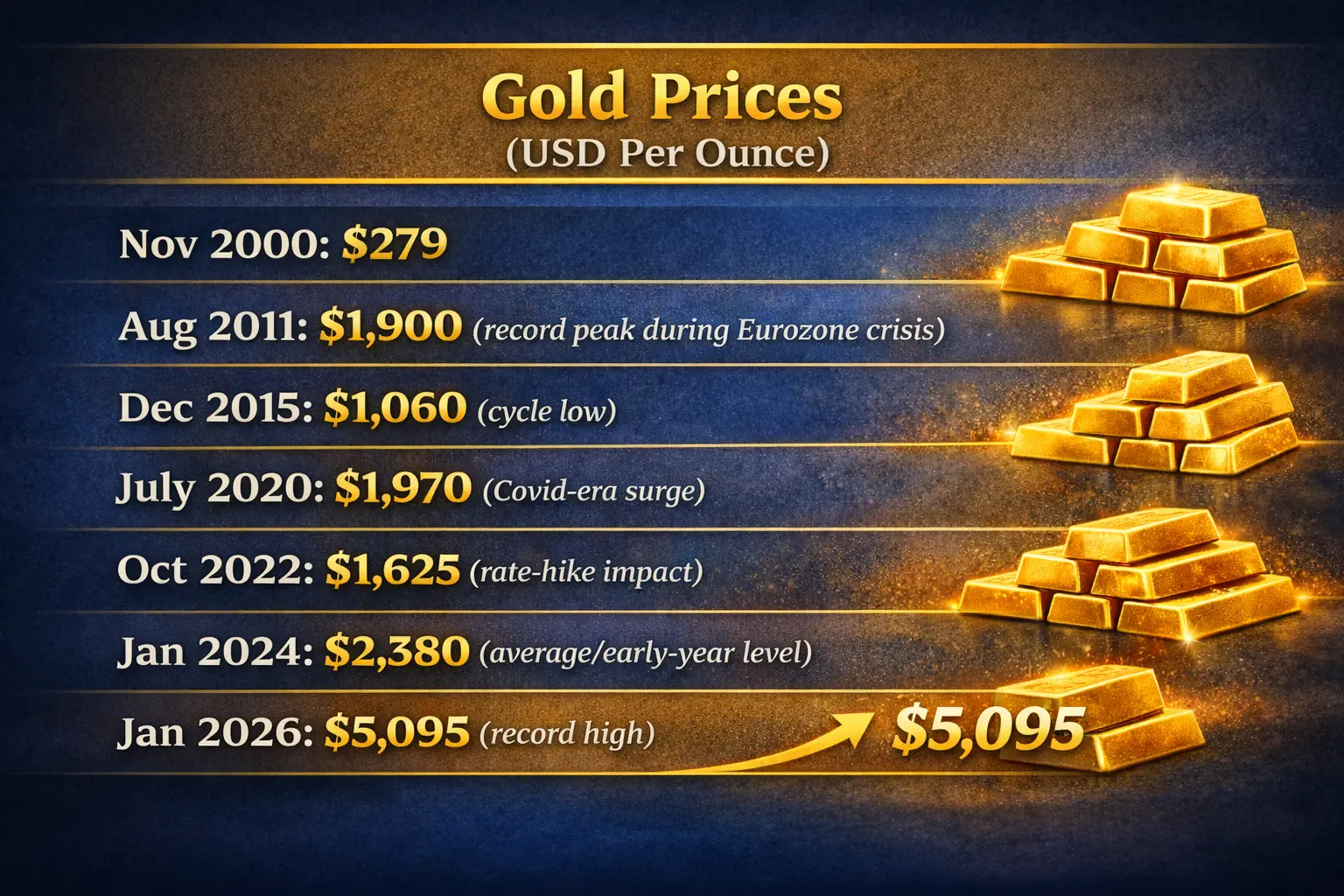
The returns have been incredible. Gold went up nearly 65% last year and has already gained another 15% in the first few weeks of 2026. If you look at the long-term trend, the resilience is remarkable. Gold was around $267 an ounce in late 2000, hit $1,826 in 2011, and dipped to $1,060 in 2015 before starting this current climb. Since the turn of the millennium, investors have seen returns of about 1,600%.
Gold is becoming the new global currency
The biggest change, however, is how central banks are using gold. They aren’t just holding it as a backup anymore; they are treating it as a legitimate alternative to foreign cash.
The numbers tell the story. In 2024, the value of official gold reserves was roughly half that of foreign exchange reserves. Today, gold reserves have surged to about $5 trillion. Central banks bought 634 tonnes in the first nine months of last year alone and are on track to hit 900 tonnes by year-end. Countries are clearly trying to move away from the US dollar and build up gold as a strategic reserve.
The interest rate factor
Analysts expect US interest rates to keep falling. When rates are low, bonds don’t pay much, which makes gold—which doesn’t pay interest—look a lot more attractive. Unlike stocks or government bonds, gold’s value isn’t tied to any one country’s success. People usually only sell their gold when they think they can make significantly more money elsewhere.
Supply is running low
On the supply side, there just isn’t that much gold left. The World Gold Council says we’ve mined about 216,265 tonnes so far, and the US Geological Survey estimates there are only 64,000 tonnes still in the ground.
Culturally, demand remains massive. In India, gold is a staple for weddings and traditions. Households there are estimated to hold $3.8 trillion worth of gold – nearly 89% of India’s GDP. In China, it’s a mix of the central bank and everyday retail investors driving the market even higher.
The impact on India
This price spike is putting a strain on India’s economy. Last year, the country imported $58.8 billion worth of gold and $9.2 billion in silver. Together, these metals made up nearly 9% of India’s entire import bill. Even with a stronger rupee, local prices stay high because of taxes and duties that add about 9% to international rates.
What’s next?
While the outlook is still very high, experts say you should still be careful. Prices could keep rising, but the market can be volatile. One thing is certain: gold has entered a new era. It’s no longer just a luxury or a simple hedge – it has become a foundational pillar of the global financial system.